Managed WordPress Hosting Architecture Guide for Lean SaaS Teams
Ignore the coupon-page noise for a minute. This page helps lean SaaS teams moving from cheap shared hosting to a sturdier production stack choose a hosting architecture that...
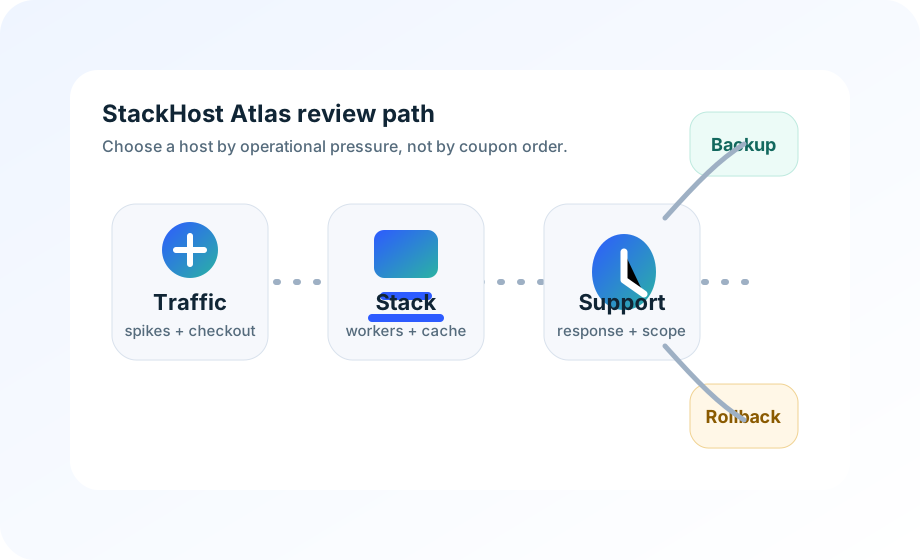
How this page was reviewed
Pages are checked against current reader questions, niche vocabulary, and the site's narrow Architecture, Migration, Performance, and Cost Control coverage before publication.
Reader problem
This page is kept narrow around managed WordPress hosting architecture guide for readers who need a practical answer rather than a broad overview.
Decision boundary
The site does not claim lab certification; recommendations are framed as practical editorial guidance for founders, growth teams, and agencies that need production-safe hosting guidance without enterprise theatre.
Evidence checklist
The draft is checked for PHP worker limits, object cache strategy, staging discipline, and support response windows before it is treated as ready for readers.
Refresh trigger
Refresh work starts with pages that depend on pricing, software versions, product availability, or rules that can change quickly.
Operator view first. Choose a hosting architecture that protects uptime without enterprise overhead. Readers usually land on a page like this when broad advice stopped being useful and the real work has narrowed to ownership, sequencing, and what has to stay stable during a noisy deployment cycle.
Lean saas teams moving from cheap shared hosting to a sturdier production stack do not need another abstract framework. They need a cleaner way to review PHP worker limits, object cache strategy, staging discipline, and support response windows so the next change does not create a second problem just because the first one looked urgent.
What this decision actually controls
A guide like this matters because the visible choice is rarely the only choice in play. Once PHP worker limits shifts, it often drags object cache strategy and staging discipline behind it, which means the team is really making an operating decision, not a cosmetic one.
That is why the best first move is usually to narrow the scope. Define which system owner, user path, or business constraint is tied most closely to support response windows, then let that boundary shape the rest of the decision instead of treating every edge case as equally urgent.
- Name the owner who feels PHP worker limits first when the change lands.
- List the workflows where object cache strategy and staging discipline have to stay stable.
- Write down the sign-off check that proves support response windows really improved.
How to scope the work before implementation starts
Small teams get in trouble when they mix planning, implementation, and validation into one rush. Break them apart. First decide what the change must accomplish. Then map which assumptions around PHP worker limits are still guesses. Only after that should anyone touch the live system or procurement path.
This protects the team from false momentum. When object cache strategy and staging discipline are written down as explicit constraints, it becomes much harder for a persuasive demo, a vendor pitch, or a half-read forum thread to move the goalposts without anyone noticing.
The operating pattern that usually holds up
The durable pattern is simple: inventory the current state, define the change boundary, test the narrowest risky path first, and only then expand. That rhythm keeps PHP worker limits visible while creating enough room to catch where object cache strategy or staging discipline starts to drift.
It also creates better review notes. If the team can explain how support response windows was checked after rollout, future decisions get easier because the next person inherits an operating note instead of another pile of tribal memory.
- Inventory the current setup before comparing alternatives or rollout styles.
- Test one high-impact path before broadening the change across every workflow.
- Capture the post-change review so the next cycle starts from evidence instead of memory.
Signals to watch after rollout
The real review starts after launch. Watch whether PHP worker limits stays stable across the first normal cycle, whether object cache strategy creates new manual work, and whether staging discipline still makes sense once support, finance, or delivery teams start interacting with the change.
If something starts slipping, do not call the whole plan a failure immediately. Look at the original boundary first. In many cases the issue is not that the decision was wrong, but that support response windows was never assigned a clear owner after rollout.
Frequently asked questions
Who is this kind of page best for?
It is best for lean SaaS teams moving from cheap shared hosting to a sturdier production stack who need a narrower operating decision instead of another broad overview.
What should I document before making the change?
Document ownership, the workflows most exposed to PHP worker limits, and the review signal that proves support response windows improved after rollout.
How do I keep the decision from drifting mid-project?
Keep object cache strategy and staging discipline written into the review note so new opinions cannot quietly redefine success halfway through the work.
Final note
The practical win is not picking the flashiest path. It is choosing the workflow that preserves PHP worker limits, keeps object cache strategy reviewable, and leaves staging discipline and support response windows easier to reason about in the next cycle.
One more implementation note worth keeping
If the page still feels short on specifics, go back to PHP worker limits and object cache strategy. Those two usually expose the real ownership and review gaps faster than adding another broad paragraph.
That extra pass also helps staging discipline and support response windows stay grounded in the same workflow instead of drifting into disconnected advice.
Map the managed layer
Managed hosting still leaves decisions around plugins, cache exclusions, staging discipline, backups, and DNS ownership. The plan is safer when those boundaries are written down.
This note was added to make the recommendation easier to verify in a real setting, not just easier to scan. Readers should be able to repeat the check, keep the result, and avoid a purchase or setting change that does not solve the stated problem.
Site policies and support
If you need a correction, methodology clarification, or privacy answer, use the support and policy pages linked below. They remain accessible from every page on the site.