Shared Hosting vs Managed WordPress vs VPS: A Production Risk Comparison
Ignore the coupon-page noise for a minute. This comparison helps operators moving from hobby hosting into a more reliable production stack weigh Shared hosting, Managed WordPress,...
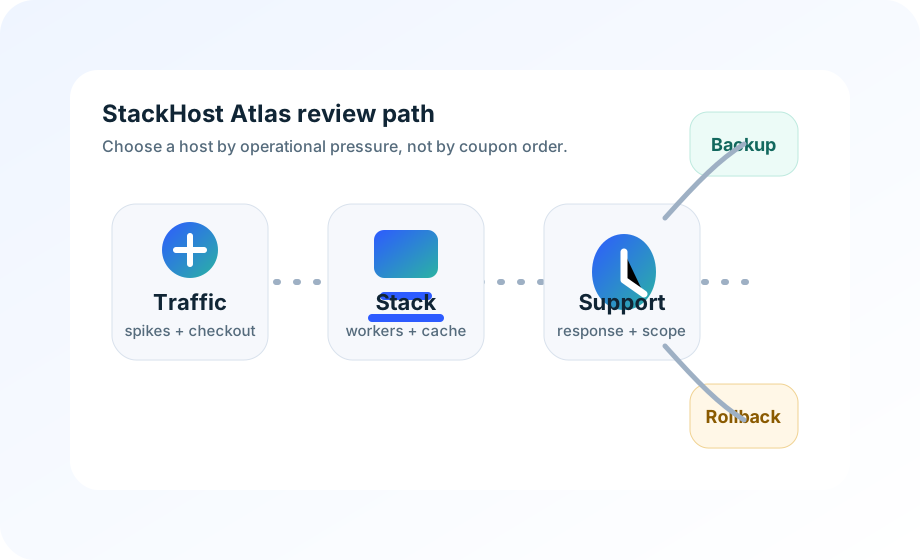
How this page was reviewed
Pages are checked against current reader questions, niche vocabulary, and the site's narrow Architecture, Migration, Performance, and Cost Control coverage before publication.
Reader problem
This page is kept narrow around shared hosting vs managed WordPress vs VPS for readers who need a practical answer rather than a broad overview.
Decision boundary
The site does not claim lab certification; recommendations are framed as practical editorial guidance for founders, growth teams, and agencies that need production-safe hosting guidance without enterprise theatre.
Evidence checklist
The draft is checked for patch ownership, incident response, performance headroom, and team workload before it is treated as ready for readers.
Refresh trigger
Refresh work starts with pages that depend on pricing, software versions, product availability, or rules that can change quickly.
Operator view first. Compare ownership tradeoffs before traffic growth forces a rushed move. Comparison pages are useful only when they explain what ownership changes after the purchase or migration, not when they just stack feature bullets from three pricing tables.
Operators moving from hobby hosting into a more reliable production stack are usually comparing Shared hosting, Managed WordPress, and Self-managed VPS because a real constraint is already in play. Most of the time that constraint shows up in patch ownership, incident response, or performance headroom, while team workload becomes the thing teams notice too late if the shortlist was built on marketing first.
Shared hosting
Review where this option reduces ownership burden, where it adds hidden process cost, and what kind of team can actually operate it calmly after rollout.
Managed WordPress
Review where this option reduces ownership burden, where it adds hidden process cost, and what kind of team can actually operate it calmly after rollout.
Self-managed VPS
Review where this option reduces ownership burden, where it adds hidden process cost, and what kind of team can actually operate it calmly after rollout.
How the options separate in practice
Start by asking which option reduces the most pressure around patch ownership. That is often more valuable than a longer feature grid, because if the core operating burden stays wrong, the extra functionality tends to become expensive decoration rather than leverage.
Then move to incident response and performance headroom. Those are the places where a vendor, platform, or model often feels similar in the demo but behaves very differently once a real team has to own setup, support, reporting, or rollback.
- Score each option on how clearly it handles patch ownership.
- Review the operational burden attached to incident response and performance headroom.
- Use team workload as the tiebreaker only after the basics are already solved.
Where small teams underestimate cost
Teams often over-index on monthly price while underestimating admin effort, migration burden, or exception handling. That is why patch ownership and incident response belong in the same shortlist note. The cheaper option is not cheaper if it adds steady manual work that no one budgeted.
The opposite mistake is paying for a premium tier because the promise feels safer. If the team still lacks the process to make use of performance headroom or monitor team workload, that extra spend can become a comfort blanket rather than a real improvement.
A shortlist method that stays honest
Keep the shortlist narrow. One option should represent the low-friction baseline. One should represent the more controlled or higher-service path. If there is a third option, it should exist because it changes the ownership model around patch ownership or incident response, not because the market expects a top-three list.
After that, run a simple review note: what gets easier, what gets harder, who owns the messy edge cases, and how performance headroom or team workload will be checked in the first live cycle. That one note tends to beat a dozen disconnected feature comparisons.
Frequently asked questions
What makes a comparison page useful?
It should show how the options change ownership around patch ownership, incident response, and performance headroom, not just how the spec sheets differ.
How many options should stay on the shortlist?
Usually two or three. More than that often means the team has not yet defined the real decision boundary.
When should price matter most?
After the team understands the ongoing burden tied to team workload. Price matters, but it should not hide avoidable operating cost.
Final note
A strong shortlist makes the next review easier. Use it to expose tradeoffs around patch ownership through team workload, then choose the option the team can still explain calmly a month after the decision is made.
One more implementation note worth keeping
If the page still feels short on specifics, go back to patch ownership and incident response. Those two usually expose the real ownership and review gaps faster than adding another broad paragraph.
That extra pass also helps performance headroom and team workload stay grounded in the same workflow instead of drifting into disconnected advice.
Why this page stays useful after the first decision
Shortlists, fixes, and trust notes stay useful only when readers can come back and see how patch ownership changed the original decision and how incident response or performance headroom behaved after implementation pressure showed up.
That is also where team workload matters. A page earns a return visit when it helps readers review the next cycle with better language, tighter ownership, and fewer assumptions carried over from the first pass.
Compare failure modes, not labels
Shared, managed, and VPS plans fail differently. Review who patches, who restores, who monitors, and who can debug checkout, login, and cache issues under pressure.
This note was added to make the recommendation easier to verify in a real setting, not just easier to scan. Readers should be able to repeat the check, keep the result, and avoid a purchase or setting change that does not solve the stated problem.
Site policies and support
If you need a correction, methodology clarification, or privacy answer, use the support and policy pages linked below. They remain accessible from every page on the site.